If you own a home in Savannah, your concrete works harder than you think. Between near-constant humidity, intense Georgia sun, salt air off the coast, and the kind of afternoon downpours that arrive without warning, bare concrete simply doesn't hold up the way it would in a drier climate. Epoxy and concrete coatings solve that problem — and this guide walks you through everything you need to know before you invest in one.
What Is Epoxy Flooring, Exactly?
"Epoxy flooring" is shorthand for a family of resinous concrete coatings. A true epoxy is a two-part system — a resin and a hardener — that chemically bonds to prepared concrete and cures into a hard, seamless, non-porous surface. In practice, most quality floor systems combine an epoxy base coat with a decorative layer (flake or metallic pigment) and a protective clear top coat such as polyaspartic or polyurethane.
The result is a floor that resists stains, chemicals, moisture, and abrasion far better than sealed or bare concrete — and looks dramatically better, too.
The Main Types of Epoxy & Concrete Coatings
Solid Color Epoxy
A clean, uniform color with a smooth, glossy finish. It's the most budget-friendly option and works well in laundry rooms, basements, and simple garages.
Flake (Chip) Systems
Vinyl flakes broadcast into the base coat add texture, hide imperfections, and provide slip resistance. Flake epoxy flooring is the most popular choice for Savannah garages because it's durable, forgiving, and available in dozens of color blends.
Metallic Epoxy
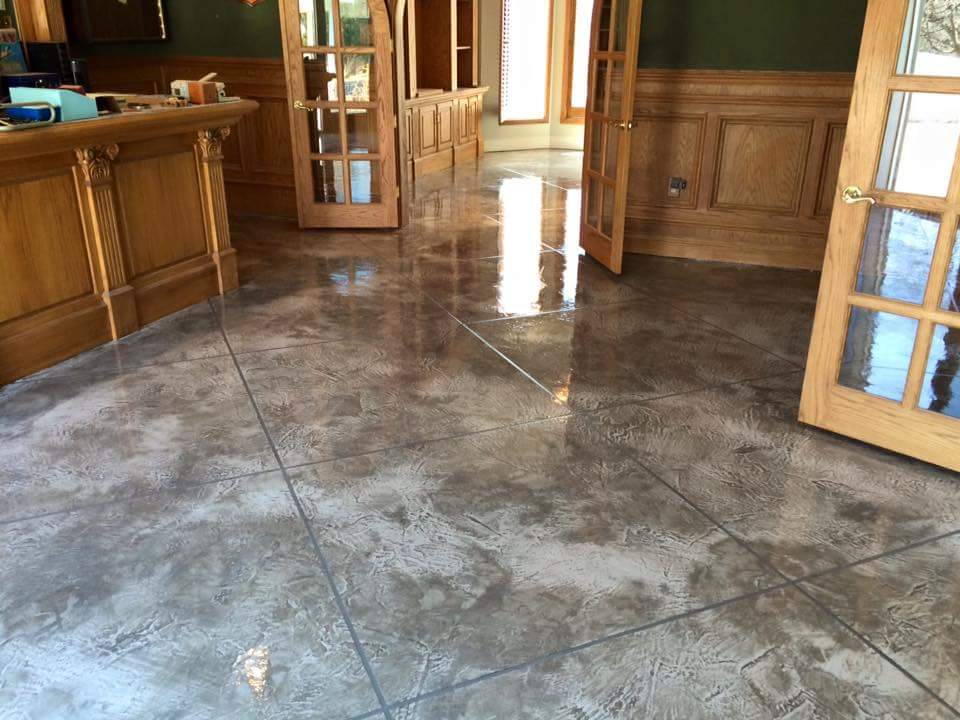
Metallic pigments are manipulated during application to create flowing, three-dimensional patterns that look like marble or liquid metal. Metallic epoxy floors are a true statement piece for entryways, sunrooms, and high-end living spaces.
Polyaspartic Coatings
Technically a polyurea, polyaspartic cures in hours instead of days, resists UV yellowing, and goes down in a wider range of temperatures — which makes it especially well-suited to Savannah's climate. It's often used as the top coat over an epoxy base.
Why Savannah's Climate Changes the Equation
This is where local experience matters. Three coastal-Georgia realities should shape your decision:
- Humidity and moisture vapor. Savannah sits near sea level, so moisture constantly wicks up through slabs. A coating that isn't installed over properly profiled, moisture-tested concrete can bubble or delaminate.
- UV exposure. Standard epoxy ambers (yellows) in direct sun. For garages with south-facing doors, sunrooms, and any outdoor area, UV-stable polyaspartic top coats are worth it.
- Heat. Hot tire pickup pulls cheap coatings right off a garage slab. Professional-grade systems with real surface prep don't have this problem.
We dig into this more in our guide on whether epoxy peels in Savannah's heat and humidity.
Where Savannah Homeowners Use Epoxy
The most common projects we install are garage floor coatings, interior residential epoxy floors (kitchens, basements, laundry rooms, sunrooms), and outdoor patio and pool deck coatings. Each space calls for a slightly different system, which is why a one-size-fits-all quote is usually a red flag.
What Does Epoxy Flooring Cost?
Pricing depends on square footage, the condition of your concrete, and the system you choose. Rather than guess, we break down the real numbers in our dedicated post on how much a garage floor coating costs in Savannah. The short version: professional systems cost more than a big-box DIY kit, and they last many times longer.
DIY Kits vs. Professional Installation
Store-bought epoxy kits are tempting, but they're thin, water-based products applied over acid-etched (not ground) concrete. In our humid climate, that combination tends to peel within a year or two. Professional installation uses diamond grinding, crack repair, high-solids materials, and proper top coats — the difference between a floor that lasts 12 months and one that lasts 15+ years.
How to Choose the Right System
- Start with the room. Garages and patios need slip resistance and UV stability; living spaces can prioritize looks.
- Think about sun exposure. Any sunlight means you want a UV-stable top coat.
- Set a budget range so your installer can recommend the best system within it.
- Hire local. A company that installs in Savannah every week knows how to handle our moisture and heat.
The Bottom Line
Epoxy flooring is one of the best returns you can get on a Savannah home — if it's installed correctly, with the right product for our climate. Take a look at our project gallery to see the finishes in real Savannah homes and businesses, then reach out when you're ready for numbers.